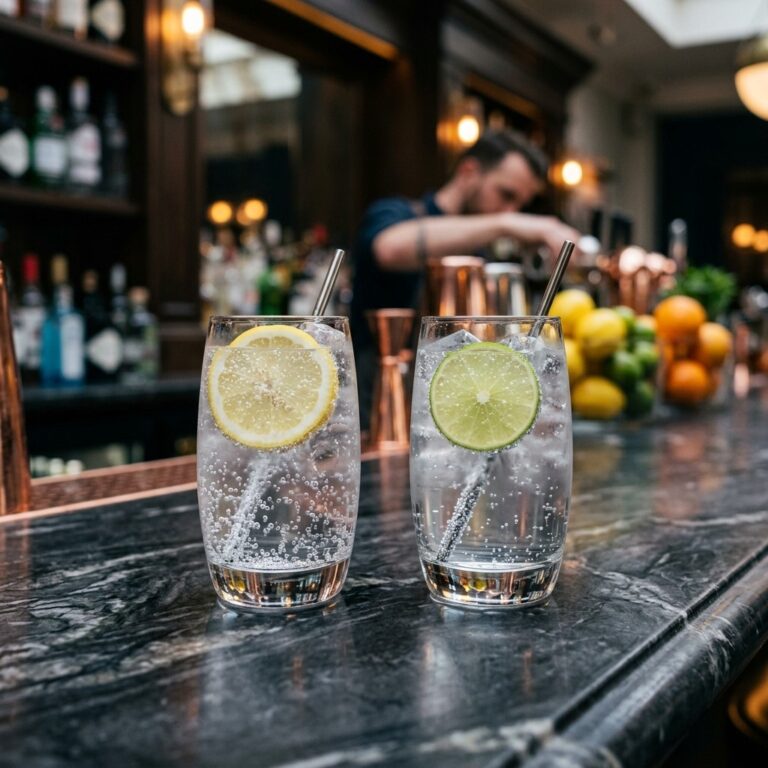
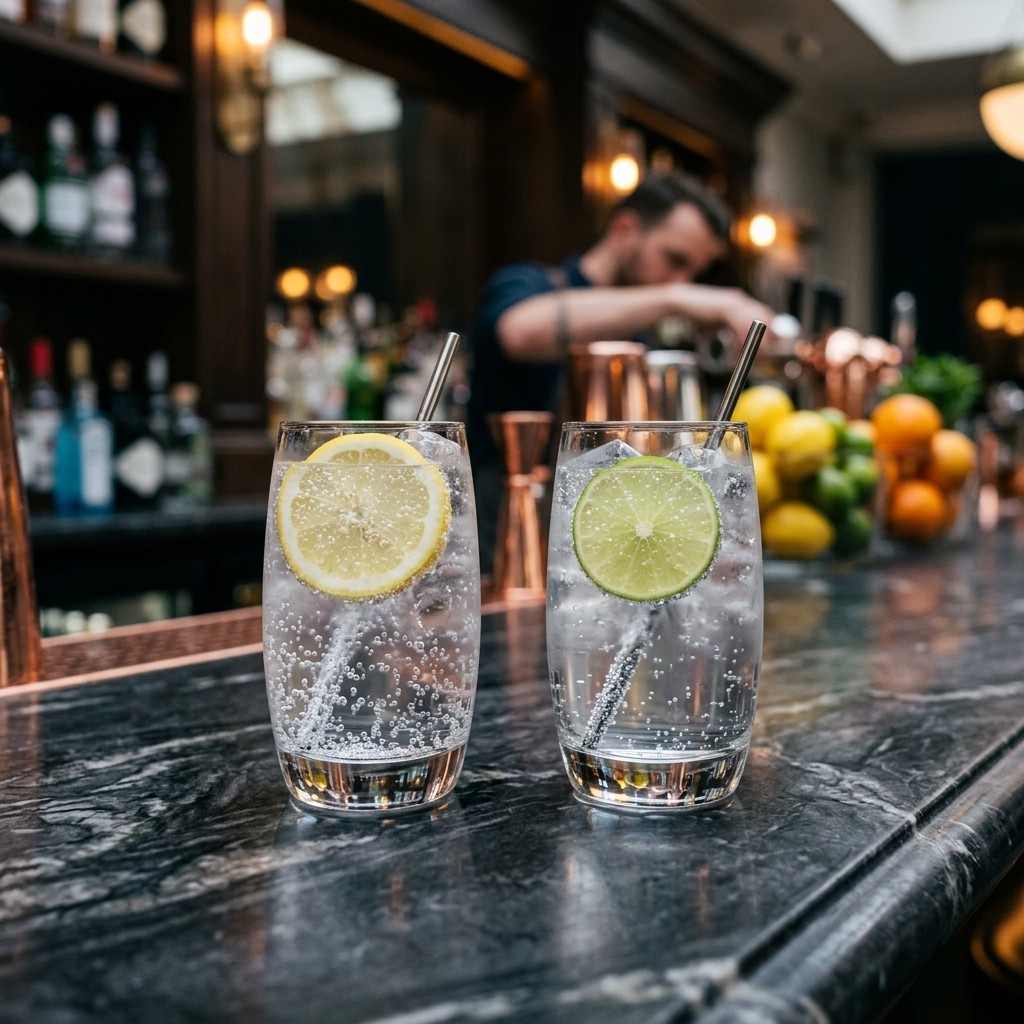
Club Soda vs Tonic Water: What Is the Difference? #2
Introduction
Standing in the beverage aisle, it is easy to confuse clear, carbonated waters, but choosing the wrong one can completely change the taste and sugar content of your drink. Club soda and tonic water may look identical in the glass, but they have completely different ingredients and culinary uses.
Quick answer: Club soda is carbonated water infused with added minerals (like sodium bicarbonate and potassium sulfate) for a clean, slightly salty taste, containing zero calories or sugar. Tonic water is a carbonated beverage containing sugar (or high-fructose corn syrup) and quinine, giving it a distinct bitter-sweet flavor and about 120-130 calories per can.
Serving note: While club soda is a calorie-free choice for hydration, tonic water contains as much sugar and calories as standard soft drinks, making portion monitoring important for sugar-conscious diets.
This guide covers the differences in mineral content, flavor profiles, carbonation methods, and mixing tips for both mixers.
Club Soda vs Tonic Water at a Glance
| Question | Short Answer |
|---|---|
| Best serving size | 150ml to 250ml per serving |
| Sugar and Calorie comparison | Club soda: 0g sugar / 0 kcal; Tonic water: ~30g sugar / 120 kcal per serving |
| Quinine content | Found in tonic water only; regulated at <83 mg/L by food safety authorities |
| Best mixology pairing | Club soda: highballs, whiskey spritzers; Tonic water: Gin and Tonic, Vodka Tonic |
| Who should ask a professional | Diabetics or weight managers (for tonic water sugar); sodium-sensitive diets (for club soda sodium) |
What Is Club Soda?
Club soda is manufactured by dissolving carbon dioxide gas in plain water under pressure – a process known as carbonation. To mimic the taste of natural mineral spring waters, manufacturers infuse the carbonated water with small amounts of mineral compounds.
Common mineral additives include sodium bicarbonate (baking soda), sodium citrate, potassium sulfate, and disodium phosphate. These minerals neutralize the natural acidity of carbonation, giving club soda a clean, slightly alkaline, and mineral-forward finish. For those exploring hydration profiles, these mineral waters serve as excellent soda alternatives when trying to quit high-sugar drinks.
Because it contains no sugar, calories, or artificial flavorings, club soda is primarily used as a neutral base for mixed drinks, a diluent for fruit juices, and a crisp standalone beverage served with a squeeze of fresh citrus.
What Is Tonic Water?
Tonic water is a carbonated soft drink that features a unique, bitter-sweet flavor. Unlike club soda, it is not a neutral carbonated water; it is a sweetened beverage formulated with specific flavoring agents.
The defining ingredient in tonic water is quinine, a naturally occurring crystalline alkaloid extracted from the bark of the cinchona tree, which is native to South America. Quinine was historically used in the nineteenth century as a preventive treatment for malaria. Because raw quinine has an intensely bitter taste, British colonial officials in India mixed it with sugar, water, and gin to make it palatable, creating the earliest prototype of the Gin and Tonic.
Modern commercial tonic waters contain much lower concentrations of quinine than historical medical doses, but they still require a high sugar content – about 8 to 9 grams of sugar per 100 ml – to balance the bitterness. Tonic water also typically includes citric acid or natural fruit flavorings to add a refreshing, citrusy note. If you are managing your carbohydrate intake, such as on a diabetic-friendly diet or a structured weight loss program, the high sugar density of tonic water requires caution.
Key Differences: At a Glance
Understanding how club soda, tonic water, seltzer, and sparkling mineral water compare is key to choosing the right beverage. The following table provides a comprehensive comparison of their properties:
| Beverage | Base Liquid | Added Ingredients | Taste Profile | Sugar & Calories (per 250ml) | Best Uses |
|---|---|---|---|---|---|
| Club Soda | Carbonated plain water | Sodium bicarbonate, potassium sulfate | Clean, crisp, slightly salty | 0g sugar / 0 kcal | Spritzers, Collins drinks, highballs |
| Tonic Water | Carbonated plain water | Sugar, quinine, citric acid | Bitter-sweet, citrusy, bold | 22g sugar / 90 kcal | Gin & Tonic, Vodka Tonic, espresso tonic |
| Seltzer | Carbonated plain water | None (or natural fruit oils) | Entirely neutral, clean | 0g sugar / 0 kcal | Mocktails, healthy hydration, light mixers |
| Sparkling Mineral Water | Natural spring water | Naturally occurring minerals | Subtle mineral depth | 0g sugar / 0 kcal | Table beverage, natural hydration |
Quinine: The Bitter Secret of Tonic Water
The bitterness of tonic water is entirely due to quinine. The concentration of quinine in modern commercial tonic water is strictly regulated by food safety authorities – such as the FDA in the United States and the EFSA in Europe – and is capped at a maximum of 83 mg per liter. This is a tiny fraction of the clinical dosage formerly used to treat malaria, which exceeded 1,000 mg daily.